
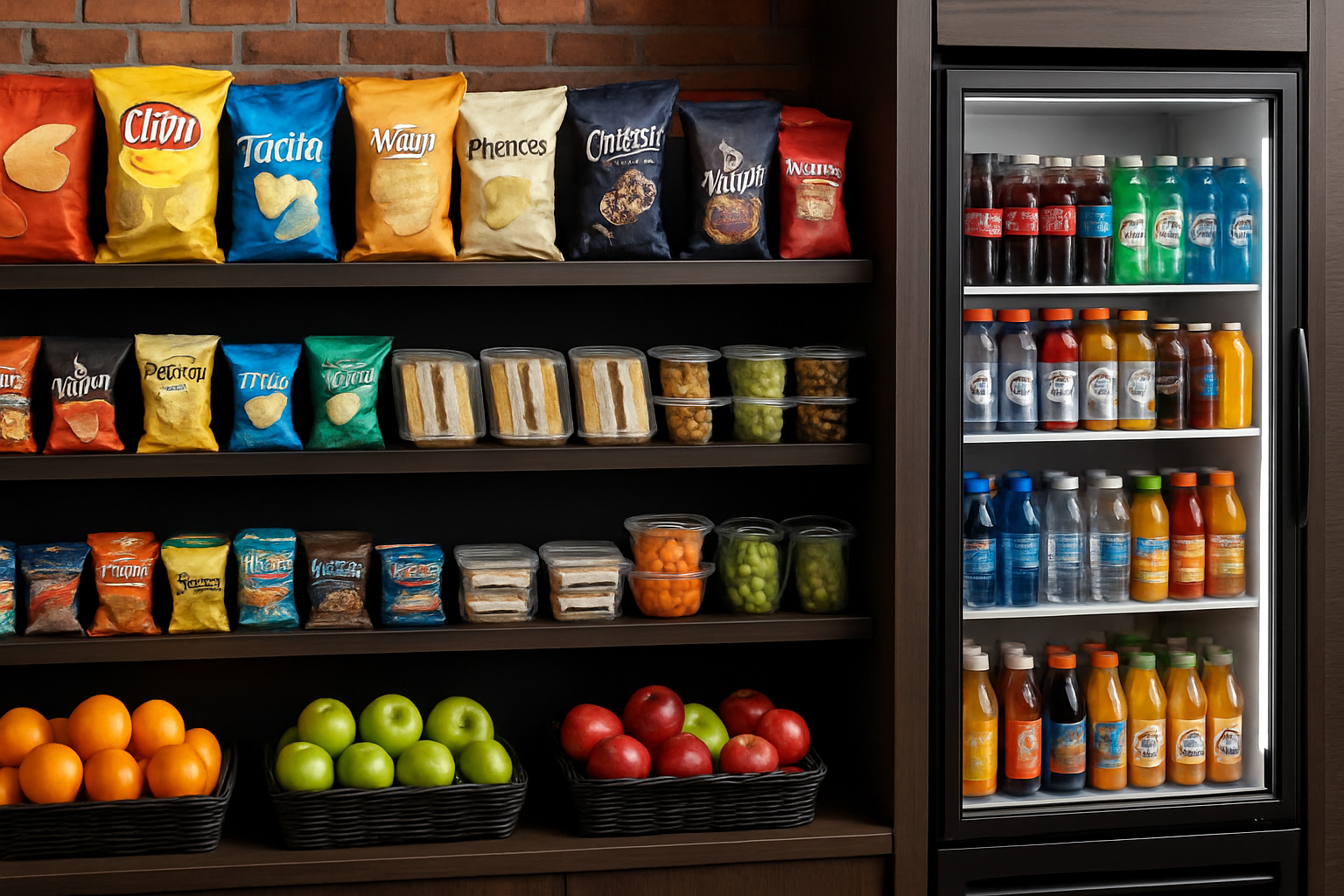
The Difference Between a Micro-Market That Thrives and One That Stalls
Walk into a well-run micro-market and something just feels right. The cooler is stocked with fresh options that look appealing, the shelves have a logical variety, and prices feel fair. Employees stop by regularly — not just when they’re desperate. Walk into a poorly planned one and you’ll find dusty granola bars no one wants, a cooler full of drinks that don’t move, and frustrated operators wondering why revenue is flat.
The difference almost always comes down to product mix strategy. Stocking a micro-market isn’t a one-time decision — it’s an ongoing discipline that blends data analysis, consumer behavior, and smart merchandising. This post breaks down the key principles operators and workplace decision-makers should follow to build a product assortment that people actually buy from.
Balancing Fresh Food and Shelf-Stable Products
Fresh food is one of the biggest advantages a micro-market has over traditional vending. Sandwiches, salads, wraps, yogurt parfaits, and fresh fruit elevate the experience and give employees a genuine lunch or snack destination. But fresh food also carries real operational risk: shorter shelf life, more frequent service visits, and spoilage costs if demand is misjudged.
The practical approach is to treat fresh and shelf-stable as complementary, not competing, categories. Fresh items draw people in and build loyalty. Shelf-stable products — packaged snacks, nuts, protein bars, candy — absorb demand when fresh supplies run low and extend revenue between service visits.
Many operators find success starting with a conservative fresh assortment and expanding it as they gain confidence in location-specific demand patterns. It’s far better to sell through a tight fresh selection consistently than to overstock and absorb spoilage losses that erode margins.
Healthy Options vs. Treats: Serving the Whole Audience
There is a persistent temptation in workplace food service to swing to extremes — stocking only “healthy” options to satisfy HR mandates, or leaning on high-margin candy and chips because they move fast. Neither approach serves your location or your revenue well.
The reality is that most workplaces have a mixed audience. Some employees are calorie-conscious and actively seek out better-for-you options. Others want a bag of chips or a cookie at 3 p.m., and that’s a perfectly legitimate purchase. A strong product mix respects both groups without moralizing about either.
A practical framework is to dedicate roughly half your assortment to better-for-you SKUs — items lower in added sugar, higher in protein, or positioned as natural or organic — and keep the other half as permissible indulgences. Within the healthy category, variety matters: not every health-conscious shopper wants the same thing, so include options across flavor profiles, dietary needs (gluten-free, plant-based, high-protein), and price points.
Price-Point Laddering: Give Shoppers a Range to Choose From
Price-point laddering is a retail principle that translates powerfully to micro-markets. The idea is simple: offer products at multiple price tiers so shoppers can self-select based on their mood, budget, or perceived value at that moment.
In practice, this means your assortment should include:
-
Entry-level items — affordable snacks and beverages that feel like an easy, low-commitment purchase
-
Mid-tier options — the bulk of your assortment, where most transactions happen
-
Premium SKUs — higher-priced items like specialty beverages, protein-forward meals, or upscale snack brands that appeal to shoppers willing to pay more for quality
Many operators underestimate how important premium items are to overall revenue. A single higher-priced transaction can match the margin of two or three mid-tier ones. Shoppers who see only budget options may feel underserved; those who see a thoughtful range feel like the market was stocked with them in mind.
Seasonal Rotation: Stay Relevant Throughout the Year
A micro-market that looks the same in January as it does in August is a micro-market that stops feeling fresh — literally and figuratively. Seasonal rotation keeps the assortment interesting, reduces fatigue among regular users, and gives you a reason to introduce new SKUs without permanently committing shelf space.
Practical seasonal opportunities include warm beverages and heartier snack options in fall and winter, lighter fare and cold drinks as temperatures rise, and limited-time flavors or formats tied to holidays and cultural moments. Even small changes — swapping out a few SKUs per visit — signal to regular users that the market is actively managed and worth revisiting.
Seasonal rotation also gives you a structured opportunity to test new products in a low-risk way. A SKU that performs well during a seasonal window is a candidate for permanent placement. One that sits unmoved confirms what the data will tell you: it doesn’t belong in the mix.
Using Sales Data to Cut Dead SKUs — And Stop Guessing
This is where disciplined operators separate themselves from those who are perpetually guessing. Modern micro-market management platforms — including the inventory and reporting tools built into 3SM’s technology — give operators visibility into exactly which SKUs are selling, how fast, at what margin, and where spoilage is occurring.
Use that data systematically. Set a review cadence — monthly works well for most locations — and apply a consistent standard: if a SKU hasn’t turned in a defined period and there’s no seasonal or promotional reason for the slowdown, it comes out. That freed shelf space becomes an opportunity to trial something new or double down on a proven performer.
Many operators also find that sales data reveals surprising patterns — a product they assumed was a safe staple may be underperforming while a niche item quietly leads its category. Let the data challenge your assumptions, not confirm them.
The Bottom Line: Iteration Beats Intuition
No product mix is perfect at launch — and the best operators know it. The goal isn’t to guess right the first time; it’s to build a system that gets smarter with every service cycle. Balance fresh and shelf-stable thoughtfully, serve both health-conscious shoppers and treat-seekers without compromise, ladder your price points, rotate seasonally, and let sales data drive every cut and addition.
Done consistently, this approach transforms a micro-market from a passive amenity into a location that employees genuinely rely on — which is exactly what drives long-term operator revenue and client retention.
If you’re evaluating how to build or improve a micro-market program at your location, Three Square Market’s team can help you think through the right product strategy alongside the right technology. Request a proposal today and let’s build something worth stocking.